

- True.
- False.
- True.
- True.
- True.
- True.
November 11-15
Lesson 1
Weight of soil/ to read the text and be ready to discuss
Hometask:4/b,c,page 28

1. Great! The weather man on TV says it will be (be) sunny tomorrow.
2. Do you think people in the future will travel (travel) to other planets like Mars?
3. What time will we arrive (arrive) in New York tomorrow, do you think?
4. I love those trainers! When I get my pocket money next week, I think I will buy (buy) them.
5. Please can you help me with my homework? I promise it won’t take (take) very long.
c;
1. Don’t give that ice cream to the cat! It might be (be) sick!
2. A: Where’s Alicia?
B: I’m not sure. I think she might be (be) at her piano lesson.
3. I don’t know if this book is a good present for my brother. He might not like (like) it.
4. Don’t put that glass there! Someone might break (break) it.
5. I’m worried about my maths test tomorrow. I might not pass (pass) it!
6. In the future, people will probably travel in space, and they might live (live) on other planets.
7. I feel awful. I think I might have (have) flu.
Lesson 2
Weight of soil/ to read the text and be ready to discuss
Grammar/first conditional

If people want to travel across the city, they won’t use a bicycle — they’ll still use their cars.
Rule: Condition clause: If + present simple, Result clause: will/won’t
Hometask:eex.7/b,c,g,page 29

1. If I fail (fail) the exam, I ’ll take (take) it again.
2. If there are (be) more cars on the road in the future, there will be (be) more pollution.
3. If you see (see) Jane, will you give (give) her my message?
4. If pollution increases (increase), more plants and animals will die (die).
5. I won’t tell (not tell) you my secret if you don’t come (not come) to Mark’s party with me.
6. My parents will be (be) really angry if they see (see) my bedroom!


November 4-8
Lesson 1
Check your progress

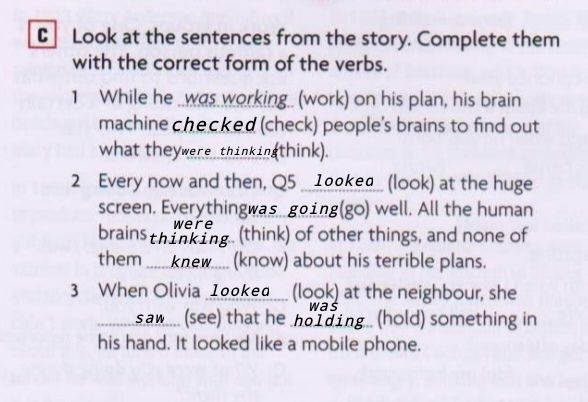
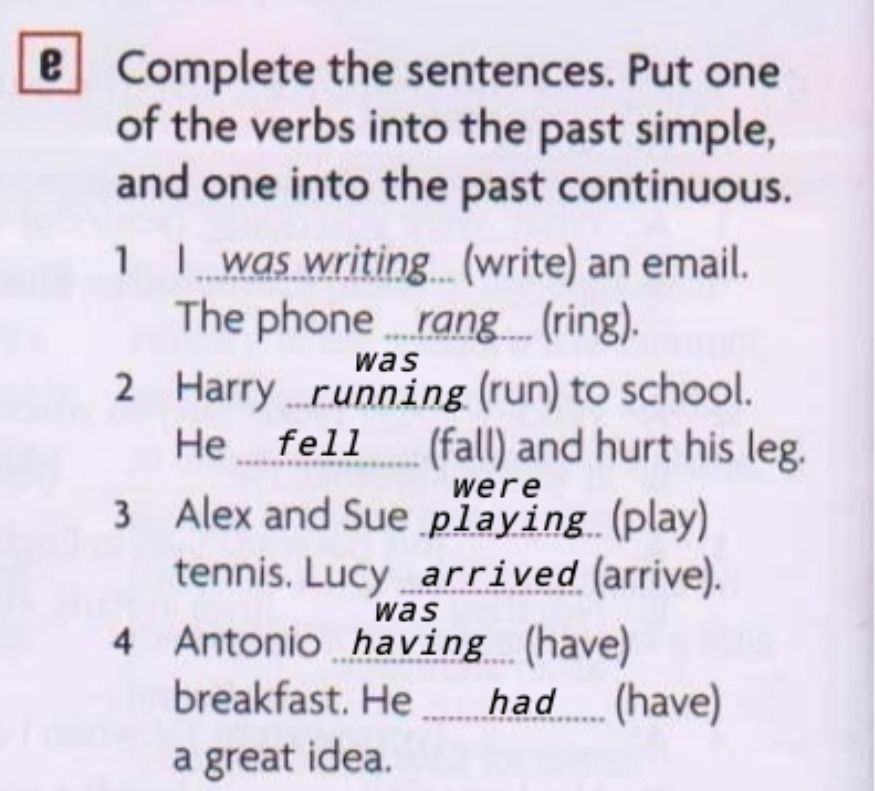
2. He was looking (look) in a shop window.
3. I started (start) to cross the road to say hello to him.
4. While I was crossing (cross) the road, I heard (hear) a noise.
5. A bus was coming (come) in my direction!
6. The bus stopped (stop) very close to me.
7. I was lucky it did not hit (not hit) me!

2. Question 1 was easy. Question 4 was easier than question 1, and question 6 was the easiest question of all.
3. Last night’s match was exciting, but Saturday’s match was more exciting than last night’s match, and Sunday’s match was the most exciting ever.
4. Yesterday was a bad day for me, but Thursday was worse than yesterday, and Friday was the worst day of my life!

2. She smiled happily.
3. My brother speaks French fluently.
4. The hairdresser cut my hair very badly.
5. I answered all the questions easily.
6. Our team played very well.

1. bad — good
2. fast — slow
3. cheap — expensive
4. beautiful — ugly
5. tidy — messy
6. quiet — noisy
7. easy — difficult

1. It rained very hard last Saturday when I was in town, and I got very wet.
2. Our dog can’t walk very well because he’s getting very old now.
3. I got a surprise yesterday. My uncle sent me some money!
4. The party was great, and I didn’t get home until midnight!
5. My brother says he gets good ideas when he daydreams.
6. I love Maths, and I’m always happy when I get the answer right.
Lesson 2
Bicycle revolution/to read and translate the text/page 26
Hometask:ex.1/b,page 26,ex.2/a,c.page 27

1. In 2007, politicians in Paris f — started a scheme to reduce pollution in the city.
2. People only have to pay a — if they use the bike for more than half an hour.
3. At more than 1,450 bicycle stations, d — people can take bikes and leave them.
4. Some people b — still use cars to travel across the city.
5. Politicians think the Velib scheme c — might help to make the air in Paris cleaner.
6. If we don’t change the situation, e — the problem of pollution will get bigger.

1. Traffic jams — Situations where there are many cars on the road, causing slow movement or stopping of traffic.
2. Pollution — Harmful substances in the environment, especially in the air or water, that can cause damage to health or nature.
3. Exhaust fumes — Gases released from vehicles, especially cars, which contribute to air pollution.
4. Reduce pollution levels — Decrease the amount of pollution in the environment.
5. Atmosphere — The layer of gases surrounding the Earth, where pollution can accumulate.
6. Factory fumes — Gases and smoke released from factories, which also contribute to air pollution.
7. Global warming — The gradual increase in the Earth’s temperature due to pollution, particularly from greenhouse gases.
8. Dramatic climate changes — Significant and rapid changes in weather patterns, often due to pollution and global warming.
9. Disappearing — Gradually vanishing; in this context, it refers to rainforests being destroyed or reduced.
10. Rise — To increase; here, it refers to temperatures continuing to go up.
11. Environment — The natural world, including air, water, plants, and animals, which is affected by pollution and climate change.

2. He was looking (look) in a shop window.
3. I started (start) to cross the road to say hello to him.
4. While I was crossing (cross) the road, I heard (hear) a noise.
5. A bus was coming (come) in my direction!
6. The bus stopped (stop) very close to me.
7. I was lucky it did not hit (not hit) me!
2. Question 1 was easy. Question 4 was easier than question 1, and question 6 was the easiest question of all.
3. Last night’s match was exciting, but Saturday’s match was more exciting than last night’s match, and Sunday’s match was the most exciting ever.
4. Yesterday was a bad day for me, but Thursday was worse than yesterday, and Friday was the worst day of my life!
2. She smiled happily.
3. My brother speaks French fluently.
4. The hairdresser cut my hair very badly.
5. I answered all the questions easily.
6. Our team played very well.
1. bad — good
2. fast — slow
3. cheap — expensive
4. beautiful — ugly
5. tidy — messy
6. quiet — noisy
7. easy — difficult
1. It rained very hard last Saturday when I was in town, and I got very wet.
2. Our dog can’t walk very well because he’s getting very old now.
3. I got a surprise yesterday. My uncle sent me some money!
4. The party was great, and I didn’t get home until midnight!
5. My brother says he gets good ideas when he daydreams.
6. I love Maths, and I’m always happy when I get the answer right.

October 5 is World Teachers' Day. That day is also declared Teacher's Day in Armenia. I think there is no need to talk about the role and importance of the teacher. everyone knows that any profession is initiated from the school desk, and a lot depends on the teacher when forming an attitude towards this or that profession... The importance of the question is what the teacher is like, his knowledge and human quality positive harmony, the ability to display it flexibly... If not every day, at least on this day of every year, the country's government should ask itself whether everything possible has been done for the effective work of the teacher, and the teacher should ask himself whether he is up to the task. who demands his profession :
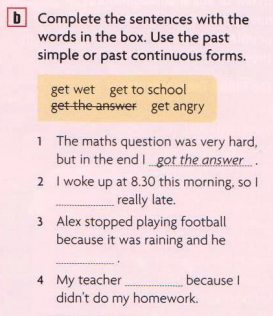
Got to school
Got wet.
Got angry
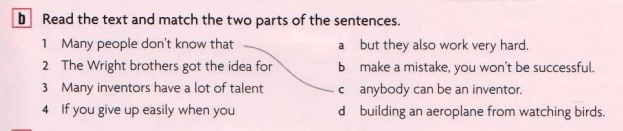
2=d
3=a
4=b
Computers, love them or hate them, we rely on them every day. You’re using one right now! But have you ever stopped to think about who invented computers and how they came to dominate our lives? So who created the first computer, and whom can I blame for all those wasted hours?
You might be surprised to learn that many computer pioneers struggled to get funding for their ideas and faced skepticism from their contemporaries. The word «computer» is also much older than you might think!
The first computer, the Antikythera mechanism (200 BC – 70 BC), was mechanical. Initially, computers were people – it was a job title. The first computer was invented by Charles Babbage (1822) but was not built until 1991! Alan Turing invented computer science. The ENIAC (1945) was the first electronic general-purpose digital computer; it filled a room. The Micral N was the world’s first “personal computer”(1973). It was not a commercial success. The Epson HX-20 (1981) was the world’s first laptop, although you wouldn’t recognize it as a laptop today. The first Mac debuted in 1984.
Ոխ պահելով վազի դեմ, մորենին ասաց.
— Քեզ նման կբարձրանամ և կրկնակի պտուղ կտամ և կգերազանցեմքեզ, որովհետև ձմռանը ես անթառամ եմ լինում:
Վազը հակաճառեց նրան.
— Քո պարծանքը կատարյալ կլինի, երբ աշնանը հավաքվեսհնձանում։
Իսկ աշնանը մորենին ոտնատակ եղավ։
Holding the sheep against the vine, the moraine said:

— I will rise like you and bear twice as much fruit and surpass you, for in winter I do not wither.

Vaz contradicted him.

— Your boast will be perfect when you gather in the fall.

And in the fall, the moraine was trampled.
 Վարազդատ Մահամ